Sushi and Wasabi SVG Design
A Designer’s First Glance: Playful, Precise, and Purpose-Built
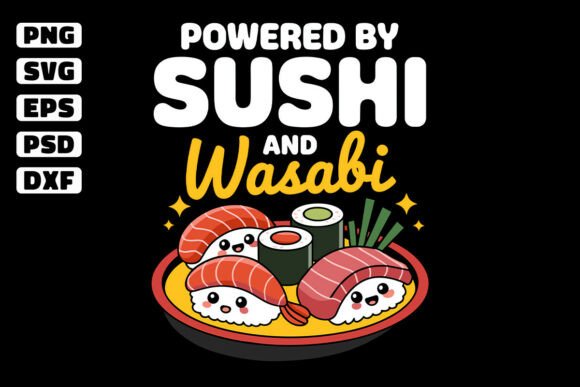
When I opened the Sushi and Wasabi SVG Design, my immediate thought wasn’t “cute food graphic”—it was “this has real embroidery legs.” The composition balances whimsy and clarity: a compact roll of sushi sits beside a bold, stylized wasabi mound, both rendered with clean outlines and intentional negative space. There’s no visual clutter—no tiny floating soy sauce droplets or unnecessary chopstick shadows—just confident, scalable shapes that breathe well on fabric. As a designer who regularly translates digital graphics into machine embroidery designs, I appreciate how this avoids over-detailing. It doesn’t try to mimic photorealism; instead, it leans into graphic strength—a smart move for anything from an embroidered patch to a boutique tea towel.
Where It Shines in Real Embroidery Projects
I tested the Sushi and Wasabi SVG Design as the centerpiece for a custom linen apron—intended for a local chef’s pop-up stall. On medium-weight cotton twill with tear-away stabilizer, it stitched cleanly at 3.8" wide. The curves held shape, the wasabi’s textured top translated well into satin stitch, and the sushi’s rice grain effect read clearly without becoming muddy. That’s not accidental—it suggests thoughtful vector construction, likely optimized for clean cutting and smooth stitching paths.
This design naturally fits custom apparel (think sweatshirt embroidery for a Japanese-inspired café), embroidered patches for culinary school grads, and tote bag designs sold at farmers’ markets or food festivals. It also works beautifully as baby embroidery on organic cotton bibs or onesies—its rounded forms feel gentle, not sharp or cartoonish. For holiday embroidery, it adds unexpected charm to kitchen towels gifted during festive baking swaps. And for Etsy sellers or small shop products, it’s a refreshingly niche yet broadly appealing asset—chef enthusiasts love it, crafters trust its versatility, and customers recognize it instantly.
Where Caution Is Needed—Not Flaws, Just Facts
No design is universal—and the Sushi and Wasabi SVG Design is no exception. On stretchy fabric like lightweight jersey tees, I’d recommend basting + cut-away stabilizer to prevent puckering around the curved edges. On dark fabric, avoid light thread unless you’re intentionally going minimalist—the wasabi’s visual weight depends on contrast. And while it scales well down to ~2.5", I wouldn’t push it below 2" for machine embroidery design use: the inner details of the sushi roll start to compress, risking lost definition in the fill stitch.
It’s also not ideal for curved surfaces like structured caps without digitizing adjustments—those tight radii demand repositioned underlay and adjusted stitch angles. Likewise, on textured fabrics (burlap, heavy terry cloth), test first: dense satin areas may sink or blur. And if you're planning applique design integration, check whether the SVG includes separate layers—this file appears unified, so manual separation would be needed for layered fabric builds.
What It Adds to Your Handmade Product—and What It Doesn’t
The Sushi and Wasabi SVG Design elevates perceived value without overcomplicating execution. A simple black tote with this embroidered front feels intentional, curated—not generic. Customers notice that. It supports brand consistency for food-focused makers: consistent tone, clear theme, zero visual noise. It also boosts giftability. I’ve seen similar motifs sell steadily as personalized gifts—especially paired with a handwritten note about “a little heat and harmony.”
But it won’t carry weak execution. If your stitch density is too high on thin fabric, the wasabi will pucker. If your thread colors lack contrast, the sushi disappears. This isn’t a “set-and-forget” embroidery file—it rewards attention to detail, which is exactly what makes it trustworthy for commercial embroidery and craft business use.
Practical Designer Notes Before You Stitch
- Always test the Sushi and Wasabi SVG Design on scrap fabric first—especially if using textured, dark, or stretchy materials.
- Review stabilizer choice: tear-away for stable wovens, cut-away for knits, and fusible for lightweight linens.
- Check hoop size compatibility before digitizing—some versions may require a 4"x4" minimum.
- Inspect small details in your embroidery software: ensure the rice grains and wasabi texture translate clearly at your intended size.
- Test in black and white mockups to assess silhouette strength—this design holds up well, but verify for your specific layout.
- Compare performance on light and dark fabric backgrounds; adjust thread contrast accordingly.
- Confirm licensing terms before selling finished items or bundling the Sushi and Wasabi SVG Design as part of a digital embroidery file pack—this matters for Etsy sellers and digital product sellers.
Final Thought: A Thoughtful Tool, Not Just a Trend
The Sushi and Wasabi SVG Design stands out because it understands its role: it’s not background filler or fleeting decor—it’s a quiet signature. Whether stitched on a chef’s apron, a baby’s burp cloth, or a boutique’s holiday tea towel, it communicates personality without shouting. As a working designer, I don’t reach for every food-themed graphic—I reach for ones that stitch cleanly, scale reliably, and resonate with real people. This one does. It belongs in your design assets library not because it’s trendy, but because it’s practical, expressive, and built to become part of something handmade, meaningful, and well-made.