Black Sheep by Choice Funny SVG Design
A Designer’s First Glance: Charm with Clear Intent
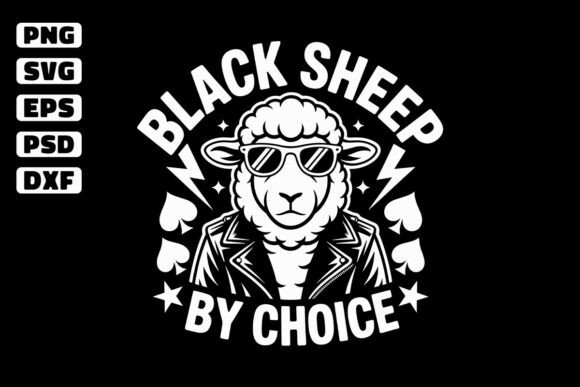
Opening Black Sheep by Choice Funny SVG Design feels like spotting a witty, confident smile in a crowded craft fair booth — it’s instantly recognizable, lightly irreverent, and built to resonate. The silhouette is clean and bold, with strong negative space around the sheep’s outline and just enough stylized detail (a sly eye, slightly tilted head) to carry personality without clutter. It doesn’t try to be cute or rustic or chef-themed — it leans into dry humor with visual economy. That makes it unusually versatile for an embroidery file: it reads well at 3” on a tote bag handle, holds up at 1.75” on a baby onesie chest, and still lands as clever on a linen tea towel or apron pocket.
Where It Shines in Real Embroidery Projects
I recently prepped this design for a small-batch run of organic cotton sweatshirts for a local food co-op’s staff line — think chefs, bakers, and farmers who genuinely *are* the black sheep of their industries. Stitched at 3.25” wide with matte black thread on heather grey fleece, Black Sheep by Choice Funny SVG Design landed exactly right: legible from six feet away, soft to the touch, and conversation-starting without shouting. It worked equally well as an embroidered patch (heat-applied to denim jackets), a subtle left-chest motif on unisex tees, and even scaled down to 1.5” for a set of nursery pillow covers — where parents appreciated its gentle irony over literal animal motifs.
For Etsy sellers and craft business owners, this design fits neatly into several high-intent categories: personalized gifts (add a name below the sheep in a clean sans-serif), holiday embroidery (pair with wool-blend blankets or embroidered stockings), and boutique branding (think “black sheep” as a playful nod to small-shop independence). As a digital embroidery file, it’s also ideal for printable mockups — its strong shape reproduces crisply in grayscale previews, helping buyers visualize before purchase.
Where to Pause — Not Problems, Just Practical Checks
This isn’t a one-size-fits-all embroidery file — and that’s a good thing. Its charm relies on contrast and clarity, so it needs thoughtful execution. On dark fabric, avoid light thread unless you’re using high-contrast poly or metallics — the design’s wit gets lost in low-contrast stitching. On textured fabrics like terry cloth or bouclé, test stitch density first: too many fill stitches can mute the outline; a lighter fill or satin-stitch border helps retain definition. And while it scales beautifully, don’t push it below 1.25” hoop size without checking small details — the eye and curved horn tip are expressive but not micro-detailed.
For stretchy knits or thin woven fabrics (like lightweight chambray or rayon blends), stabilizer choice matters more than usual. A medium-weight cutaway or tear-away + topping combo keeps the shape crisp without puckering. And on curved surfaces — caps, beanies, or tapered pillow covers — reposition the design slightly higher than center to account for seam distortion during hooping.
What This Design Says About Your Finished Product
Black Sheep by Choice Funny SVG Design quietly elevates perceived value. It signals intentionality — not just “I embroidered something,” but “I chose this because it fits.” Customers notice that. On handmade products, it adds warmth and authenticity; on commercial embroidery, it lends approachable professionalism. For small shop owners, it supports brand consistency when used across apparel, patches, and packaging — all while staying flexible enough for seasonal swaps (e.g., red thread for holidays, sage green for spring markets).
It also boosts buyer engagement. People pause, smile, and ask questions — which means longer dwell time on your Etsy listing, better photo storytelling, and stronger word-of-mouth. But that only works if the stitching is clean. A poorly stabilized or mis-threaded version undermines the message: cleverness shouldn’t look sloppy.
Embroidery Designer Notes You’ll Actually Use
- Always test on scrap fabric first — especially with your exact thread, stabilizer, and machine tension settings.
- Check thread color contrast in natural light *and* under store lighting — what looks bold on screen may fade on dark fabric.
- Review stitch density in your embroidery software. If fill areas feel heavy for your fabric weight, reduce density by 5–10%.
- Confirm hoop size compatibility — this design fits comfortably in a 4×4 hoop, but verify alignment if nesting multiple designs.
- Inspect small details in both zoomed-in and thumbnail views — does the eye read clearly? Does the curve of the horn hold?
- Test black-and-white mockups to assess how it reads without color context — essential for digital product previews.
- Compare light/dark fabric backgrounds side-by-side before finalizing thread choices.
- Use proper stabilizer — medium cutaway for knits, tear-away for stable wovens, and always add a light topping for textured surfaces.
- Verify licensing before selling finished items or digital embroidery files — this design is marketed for crafts and graphics use, but confirm commercial rights apply to your specific business model.
Final Thought: A Design That Earns Its Place
Black Sheep by Choice Funny SVG Design isn’t flashy — and it doesn’t need to be. It’s the kind of embroidery file that earns repeat use because it solves real problems: it communicates personality quickly, adapts across product types, and stays true to its voice without demanding special treatment. Whether you’re stitching custom apparel for a client, building a cohesive craft business line, or creating a heartfelt personalized gift, this design arrives ready — but only if you meet it halfway with smart, grounded execution. That balance — between clever concept and reliable craftsmanship — is why it belongs in your working library of design assets.